






Aug 24, 2026 Andrew Low
Maximising Your Super
Personal super contributions remain one of the most effective ways to build long-term financial security. In addition to growing your retirement savings in a concessionally taxed environment, they can provide valuable tax advantages—especially when timed strategically.
Types of Contributions
There are two main categories of contributions. The table below sets out the key differences.
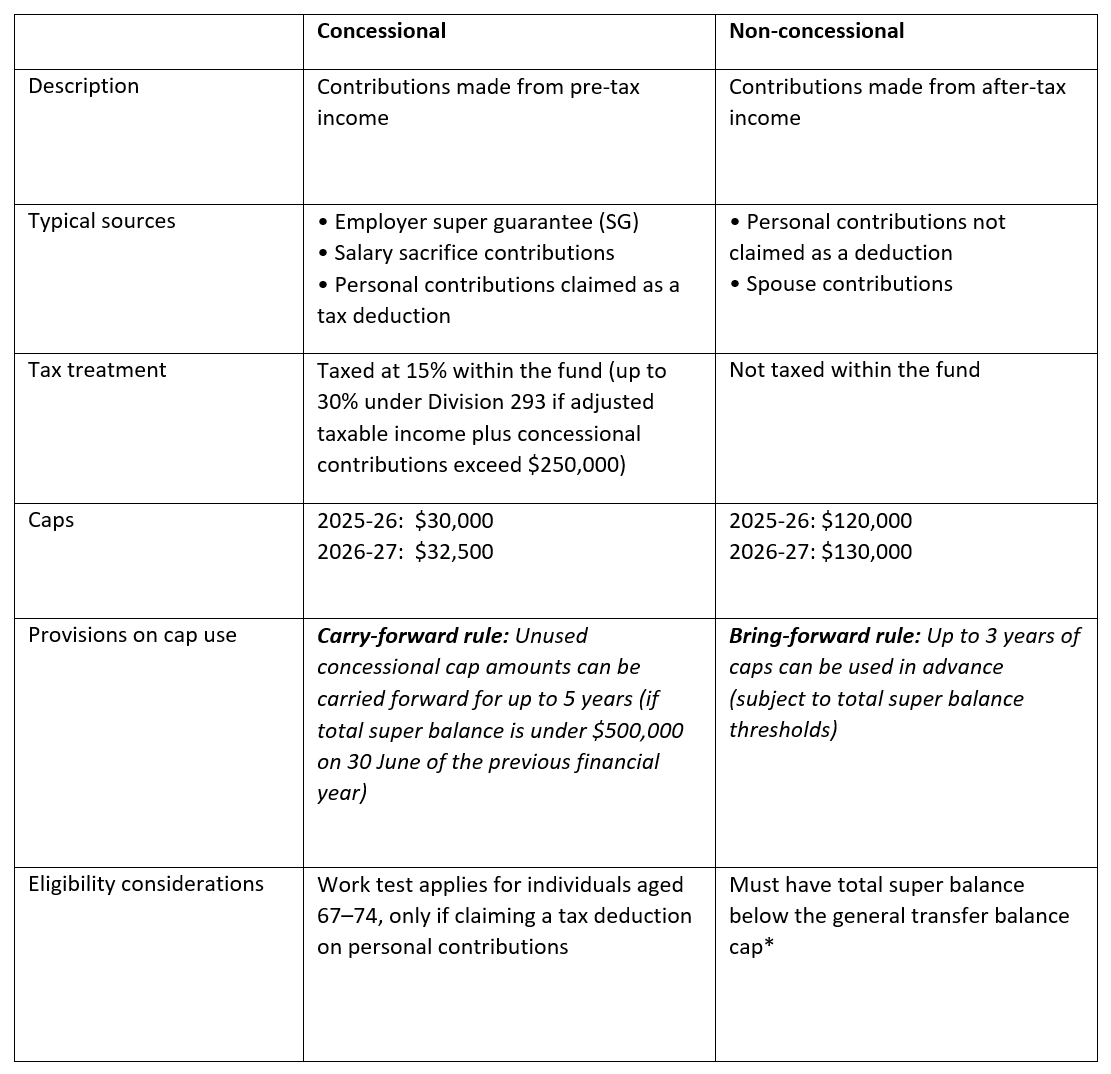
*The general transfer balance cap is $2.0 million for 2025-26, and set at $2.1 million for 2026-27
Understanding your eligibility to contribute and how to use the caps can help you optimise contributions, reduce tax liabilities and accelerate your retirement savings. Aligning contributions with major taxable events can significantly reduce taxable income.
Superannuation rules include strict caps, eligibility criteria, and timing requirements. Exceeding caps or mistiming contributions can lead to additional tax, so professional advice is essential. Age-based rules (such as the work test and age 75 limit) should also be considered, as they may impact the timing of strategies.
Super Funds were exempted from the recent Federal Budget announcements relating to Capital Gains Tax and the 30% tax on Trusts, increasing their appeal as tax effective structures in retirement.
We’re Here to Help
Our Tax and Financial Planning teams can provide strategic planning advice, especially around contribution timing and cap utilisation, to significantly benefit your long-term wealth and tax position.
If you would like to review your super contribution strategy or explore your options, speak with your RDL advisor.


